


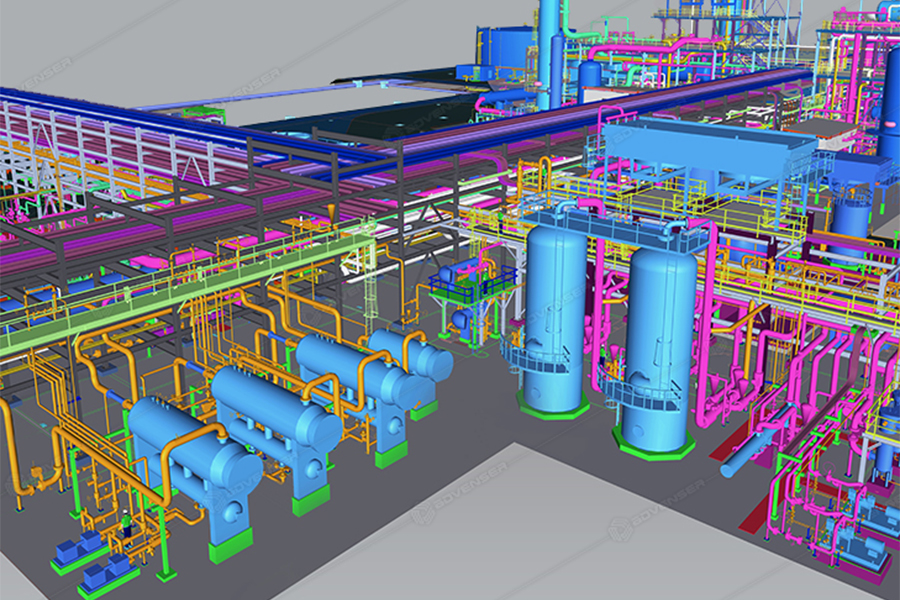
Modern industrial facilities are becoming increasingly complex as industries demand higher production capacity, improved safety, greater operational efficiency, and shorter project schedules. Facilities such as oil refineries, chemical processing plants, mining operations, power stations, water treatment facilities, food manufacturing plants, and pharmaceutical factories all rely on highly coordinated engineering disciplines to ensure successful project delivery.
Plant 3D modeling has transformed the way industrial facilities are designed, constructed, and maintained. Instead of relying solely on traditional two-dimensional drawings, engineers now create intelligent three-dimensional digital models that integrate piping systems, structural components, equipment, electrical systems, instrumentation, and civil works into a single coordinated environment.
Plant 3D modeling also supports advanced piping design, automatic isometric drawing generation, spool fabrication drawings, clash detection, quantity takeoffs, and construction planning. These digital engineering tools improve collaboration between engineering disciplines while reducing design errors, construction delays, and project costs.
This article explains Plant 3D modeling, piping design, isometric drawings, spool generation, and their importance in modern industrial engineering projects.
What Is Plant 3D Modeling?
Plant 3D modeling is the process of creating an intelligent digital representation of an industrial facility using specialized engineering software.
Unlike traditional drafting, Plant 3D models contain engineering information for every component.
The model may include:
- Process equipment
- Pressure vessels
- Storage tanks
- Pumps
- Compressors
- Heat exchangers
- Structural steel
- Pipe racks
- Process piping
- Valves
- Instrumentation
- Cable trays
- Platforms
- Access ladders
- Buildings
Each object contains engineering data that supports design, construction, operation, and maintenance.
Importance of Plant 3D Modeling
Industrial projects involve thousands of interconnected components.
Three-dimensional modeling helps engineers:
- Improve design accuracy
- Detect clashes
- Coordinate multiple disciplines
- Reduce construction errors
- Improve project visualization
- Simplify maintenance planning
- Support future plant modifications
Digital modeling has become a standard practice for modern industrial facilities.
Understanding Piping Design
Piping design involves developing safe and efficient routing for process fluids throughout an industrial facility.
Engineers consider:
- Process requirements
- Pressure ratings
- Temperature
- Material selection
- Pipe supports
- Thermal expansion
- Equipment accessibility
- Maintenance requirements
- Safety regulations
Proper piping design improves reliability and long-term plant performance.
Components Included in Piping Systems
A complete piping system consists of numerous engineered components.
Typical components include:
- Pipes
- Elbows
- Tees
- Reducers
- Flanges
- Gaskets
- Valves
- Expansion joints
- Pipe supports
- Strainers
- Flexible connectors
- Instruments
Every component must comply with applicable engineering standards.
Three-Dimensional Equipment Modeling
Industrial equipment is accurately modeled before construction.
Examples include:
- Pressure vessels
- Storage tanks
- Silos
- Conveyors
- Crushers
- Reactors
- Boilers
- Heat exchangers
- Cyclones
- Dust collectors
Accurate equipment models simplify piping layout and structural coordination.
Pipe Routing
Pipe routing is one of the most important activities during plant design.
Engineers evaluate:
- Equipment connections
- Pipe rack capacity
- Maintenance access
- Structural clearance
- Expansion flexibility
- Safety distances
- Future expansion
Efficient routing reduces fabrication and installation costs.
Pipe Support Design
Proper support systems maintain piping stability.
Common support types include:
- Guides
- Anchors
- Spring supports
- Constant supports
- Hangers
- Line stops
- Sliding supports
Support locations influence both structural loading and piping flexibility.
Clash Detection
One of the major advantages of Plant 3D modeling is clash detection.
Engineers identify conflicts between:
- Pipes
- Structural steel
- Equipment
- Electrical systems
- HVAC systems
- Cable trays
- Buildings
Resolving clashes before construction prevents costly field modifications.
Isometric Drawings
Isometric drawings provide detailed fabrication and installation information for piping systems.
They typically include:
- Pipe lengths
- Fittings
- Weld locations
- Valve positions
- Support locations
- Elevations
- Dimensions
- Material specifications
Fabricators rely on these drawings during manufacturing.
Automatic Isometric Generation
Modern Plant 3D software automatically generates piping isometric drawings directly from the three-dimensional model.
Automation provides:
- Consistent documentation
- Reduced drafting time
- Fewer drawing errors
- Faster project completion
Design updates are reflected automatically in revised drawings.
Spool Generation
Pipe spools are prefabricated piping assemblies manufactured before field installation.
A spool typically includes:
- Pipe sections
- Flanges
- Fittings
- Valves
- Welds
Spool fabrication improves construction efficiency and quality.
Benefits of Spool Drawings
Detailed spool drawings include:
- Weld identification
- Dimensions
- Material lists
- Fabrication instructions
- Inspection points
- Assembly information
Accurate spool documentation improves fabrication productivity.
Material Management
Plant 3D models contain complete material information.
Engineers can generate:
- Bill of materials
- Pipe schedules
- Valve lists
- Equipment lists
- Support lists
- Material takeoffs
Accurate material quantities improve procurement planning.
Integration with Stress Analysis
Three-dimensional piping models often integrate with stress analysis software. Plant 3D Modeling, Piping Design, Isometric & Spool Generation showcases modern digital engineering workflows.
Examples include:
- CAESAR II
- AutoPIPE
Integration allows engineers to evaluate:
- Thermal expansion
- Pipe flexibility
- Support reactions
- Equipment nozzle loads
The results help optimize piping layouts.
Structural Coordination
Plant 3D models support collaboration between structural and piping engineers.
Coordination includes:
- Pipe rack design
- Equipment foundations
- Structural supports
- Platform layouts
- Maintenance access
Integrated engineering improves overall project quality.
Construction Planning
Digital models assist construction teams throughout project execution.
They support:
- Installation sequencing
- Crane planning
- Material delivery
- Prefabrication
- Site logistics
- Safety planning
Construction planning becomes more efficient with accurate digital information.
Facility Maintenance
After project completion, Plant 3D models continue providing value.
Maintenance teams use models for:
- Equipment identification
- Spare parts management
- Inspection planning
- Future modifications
- Shutdown planning
- Asset management
Digital documentation improves long-term facility management.
Engineering Standards
Plant design projects commonly reference recognized engineering standards.
Examples include:
- ASME B31.1
- ASME B31.3
- ASME Section VIII
- API standards
- CSA standards
- ANSI standards
- ISO standards
Compliance ensures safe and reliable industrial facilities.
Software Commonly Used
Industrial engineering projects often utilize advanced software platforms.
Examples include:
- Autodesk Plant 3D
- AutoCAD
- Navisworks
- Revit
- CAESAR II
- AutoPIPE
- SolidWorks
- ANSYS
- PDMS
- AVEVA E3D
Each platform supports specific aspects of plant engineering.
Details That Make Plant 3D Projects Successful
Accurate Project Planning
Every successful Plant 3D project begins with careful planning. Engineers define project objectives, establish design criteria, identify applicable codes and standards, and coordinate the work of multiple engineering disciplines before detailed modeling begins.
Intelligent Three-Dimensional Modeling
Unlike conventional drafting, intelligent models contain engineering information for every component. Pipes, valves, equipment, and structural members include specifications, dimensions, material data, and identification numbers that improve design accuracy and project management.
Standardized Component Libraries
Using standardized libraries for piping components ensures consistency throughout the project. Engineers can quickly select approved valves, fittings, flanges, instruments, and equipment that comply with project specifications and engineering standards.
Accurate Equipment Positioning
Correct placement of pressure vessels, pumps, compressors, storage tanks, heat exchangers, and other equipment establishes the foundation for efficient piping layouts, structural coordination, and maintenance accessibility.
Optimized Pipe Routing
Well-designed piping routes reduce unnecessary pipe length, minimize pressure losses, improve flow efficiency, simplify maintenance, and reduce fabrication and installation costs while maintaining safe operating clearances.
Early Clash Detection
One of the greatest advantages of Plant 3D modeling is the ability to detect design conflicts before construction. Resolving clashes between piping, structural steel, electrical systems, and equipment eliminates costly field modifications and construction delays.
Integration with Engineering Analysis
Plant models become even more valuable when integrated with piping stress analysis, structural engineering, finite element analysis, hydraulic calculations, and equipment design. This integrated approach produces safer and more efficient industrial facilities.
Automatic Drawing Generation
Modern software automatically generates plans, elevations, sections, isometric drawings, and spool drawings directly from the digital model. This reduces drafting time while improving drawing consistency across the project.
Comprehensive Material Management
The digital model contains complete material information that supports procurement, inventory control, fabrication planning, and construction scheduling. Automatic quantity extraction reduces manual calculation errors.
Efficient Prefabrication
Detailed spool drawings allow fabrication shops to manufacture piping assemblies before delivery to the construction site. Prefabrication improves quality, reduces on-site welding, shortens installation schedules, and enhances worker safety.
Improved Project Coordination
Plant 3D modeling enables structural, mechanical, piping, electrical, instrumentation, and civil engineers to work within a coordinated digital environment. Better communication reduces design conflicts and improves project efficiency.
Long-Term Asset Management
After construction, the Plant 3D model becomes a valuable resource for facility operation and maintenance. Engineers can use the model for inspections, equipment replacement, plant expansions, shutdown planning, and future modernization projects.
Benefits of Plant 3D Modeling and Advanced Piping Design
Professional Plant 3D engineering offers significant advantages throughout the project lifecycle.
These benefits include:
- Improved design accuracy
- Better interdisciplinary coordination
- Reduced design errors
- Faster project completion
- Lower construction costs
- Improved fabrication quality
- Efficient spool generation
- Automated documentation
- Better material management
- Enhanced maintenance planning
- Improved construction safety
- Reduced project risk
- Greater operational efficiency
- Simplified future plant expansions
- Better lifecycle asset management
Future Trends in Plant Design
Digital engineering continues to transform industrial projects.
Emerging technologies include:
- Digital twin technology
- Artificial intelligence-assisted plant design
- Cloud-based engineering collaboration
- Virtual reality project reviews
- Augmented reality for maintenance
- Automated clash detection using machine learning
- Smart asset management systems
- Real-time construction monitoring
- Robotics-assisted fabrication
- Integrated predictive maintenance platforms
These innovations continue to improve engineering quality, reduce project schedules, and support more efficient industrial operations.
Conclusion
Plant 3D modeling, advanced piping design, automated isometric generation, and spool fabrication have revolutionized the planning and execution of modern industrial projects. By combining intelligent three-dimensional models with engineering analysis, material management, and automated documentation, organizations can significantly improve project accuracy, reduce construction risks, and optimize long-term facility performance. From the earliest design stages through fabrication, installation, commissioning, and ongoing maintenance, Plant 3D technology provides a comprehensive engineering solution that supports safe, efficient, and code-compliant industrial facilities. As digital engineering technologies continue to evolve, Plant 3D modeling will remain a fundamental tool for delivering high-quality infrastructure that meets the demanding requirements of industries across North America and around the world.
